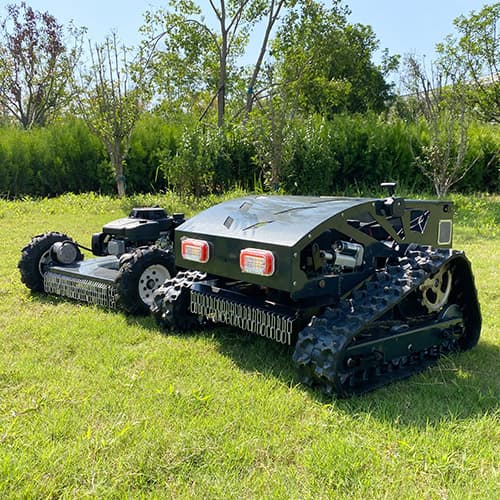

A remote control lawn mower may look simple from the outside. A strong frame, a cutting system, tracks or wheels, an engine, and a remote controller all come together to create a machine designed for demanding outdoor work.
But building a reliable remote control mower involves much more than assembling off‑the‑shelf parts. From our many years of production records inside KOIVI factory, we have seen that even premium‑grade components can deliver poor field performance without well‑thought‑out process control.
From material selection and structural fabrication to component installation, testing, and final inspection, every stage of the manufacturing process can affect how the machine performs in real working conditions.
At KOIVI, we believe that a professional remote control lawn mower should be designed around the environments where customers actually use it. That means thinking about rough ground, dense grass, slopes, long working hours, transportation, maintenance, and the everyday challenges faced by professional operators.
This article takes you behind the KOIVI factory to explore how our remote control lawn mowers are built.
It Starts With the Application, Not Just the Machine
Before a remote control lawn mower reaches the production line, the first question is simple: what kind of work is the machine expected to do?
Professional customers do not all operate in the same environment. One of our distributors from Europe shared feedback that their clients face widely‑varied site conditions from one contract to the next.
Some use remote controlled mowers on steep slopes and embankments. Others need machines for orchards, farmland, overgrown grass, commercial properties, or vegetation management projects. Ground conditions can change from one job site to another, and the mower needs to be suitable for more than a perfectly flat lawn.
This is why the development process starts with the application.
KOIVI considers factors such as:
Typical terrain conditions
Grass and vegetation density
Working slopes
Required mowing width
Machine mobility
Operator control requirements
Transportation and storage
Maintenance accessibility
Commercial working conditions
The purpose is to create a machine that can meet practical working requirements rather than focusing only on specifications on paper.
Building a Strong Foundation
The structure of a remote control lawn mower plays an important role in the overall performance of the machine.
A mower working on rough terrain may experience continuous vibration, changes in ground level, and demanding operating conditions. The frame needs to provide a stable foundation for the engine, drive system, cutting components, and remote control equipment.
Inside the KOIVI manufacturing process, structural components are prepared and assembled to create the main body of the machine. During production, our quality team carries out spot‑checks on raw material batches before fabrication begins.
The frame is more than a housing for other components. It provides the physical structure that supports the entire mowing system.
During this stage, attention is given to:
| Manufacturing Focus | Why It Matters |
|---|---|
| Structural strength | Supports major machine components |
| Component positioning | Helps ensure correct installation |
| Frame stability | Important for uneven terrain |
| Welding quality | Contributes to structural reliability |
| Surface preparation | Supports long‑term outdoor use |
For a professional mower, durability begins with the foundation.
Precision Fabrication and Assembly
Once the main structural components are prepared, the mower begins to take shape.
Different components must be installed in the correct positions so that the drive system, engine, cutting mechanism, and control system can work together.
Assembly is an important stage because even high‑quality components need to function as part of a complete system. From our after‑sales records, we have encountered cases where premium‑sourced parts performed poorly simply because of imprecise fitting during assembly.
A remote control lawn mower is not simply a collection of independent parts.
The machine's movement, steering, cutting performance, and remote operation all depend on how different systems interact.
During assembly, KOIVI focuses on creating a practical layout that allows the machine to operate as a complete working unit.
This also includes consideration of maintenance.
Professional equipment is expected to be used repeatedly, often in outdoor conditions. Components that require inspection or maintenance should be reasonably accessible.
For customers, this can make a difference over the working life of the machine.
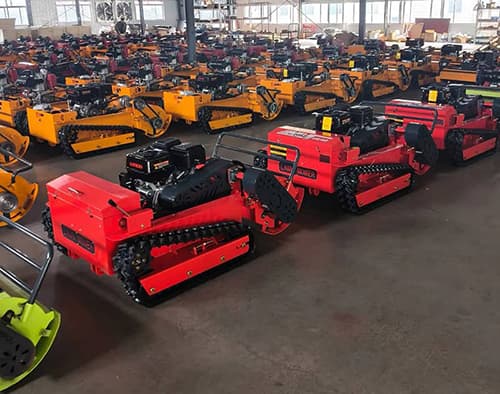
The Drive System: Designed for Movement Across Difficult Ground
One of the most important characteristics of a remote control lawn mower is its ability to move through the working environment.
Grass is rarely uniform.
The machine may encounter uneven ground, small obstacles, soft areas, rough surfaces, or changes in slope. The drive system therefore plays a central role in how the mower performs.
KOIVI remote control mowers are designed with demanding terrain in mind. Our engineers run repeated field testing over bumpy ground and gradient surfaces to tune drive‑system response before mass production.
The goal is to provide controlled movement that allows the operator to guide the machine through different working environments.
Remote operation changes the way the operator interacts with the mower.
Instead of physically sitting on or walking immediately behind the machine, the operator controls its movement from a separate position using the remote control system.
This makes the relationship between the machine and the control system especially important.
Responsive movement and predictable control help the operator guide the mower across the working area more effectively.
Installing the Power System
The power system provides the energy needed for the mower to operate.
Depending on the specific model and configuration, the power unit must work together with the cutting system, drive components, and other mechanical systems.
During production, the installation of the power system requires careful attention to component placement and system connections. Our production team double‑checks every connection point to reduce vibration‑caused loosening during long‑hour outdoor work.
A professional mower may spend long periods working outdoors. For this reason, the overall design must consider practical issues such as operating conditions, heat, vibration, and access for regular maintenance.
The objective is not simply to install an engine.
The objective is to integrate the power system into a complete machine designed for real mowing work.
The Cutting System: Where the Work Happens
The cutting system is one of the most important parts of any lawn mower.
However, different mowing applications require different capabilities.
Maintaining a short, regularly managed lawn is very different from cutting dense grass, overgrown vegetation, or rough outdoor areas.
KOIVI remote control lawn mowers are developed for demanding mowing applications where conventional residential mowing equipment may not be suitable.
The cutting system must work together with the rest of the machine.
The mower needs enough stability for the working environment, while the operator needs sufficient control to guide the machine through the area.
The overall design is therefore about balance.
A powerful cutting system alone does not create an effective professional mower. The machine also needs to move reliably, remain controllable, and operate as a complete system.
Adding the Remote Control System
This is the stage where the machine becomes more than a conventional lawn mower.
The remote control system allows the operator to communicate with and control the mower from a distance.
For users working on challenging terrain, this can change the entire mowing experience.
Instead of following the machine directly, the operator can choose a position that provides a better view of the working area.
This can be useful when mowing:
Slopes
Embankments
Rough grassland
Orchards
Areas around obstacles
Commercial outdoor properties
Difficult‑to‑access terrain
The remote control system needs to work as part of the complete machine.
Movement, steering, and operational commands must be integrated into the overall control structure.
Before the mower leaves the factory, the control system is checked to ensure that the machine responds correctly to operator input.
From Individual Parts to a Complete Machine
At different stages of the production process, a remote control lawn mower may appear to be a collection of unfinished components.
There is the frame.
The drive system.
The engine.
The cutting components.
The electrical and control systems.
The remote controller.
Only when these elements are assembled and tested together does the final machine take shape.
This is one of the most important parts of the manufacturing process.
The performance of a professional mower depends on how well different systems work together.
For example, the drive system affects how the machine moves. The structure affects overall stability. The cutting system determines mowing performance. The remote controller determines how the operator interacts with the machine.
A problem in one area can affect the overall working experience.
That is why final assembly is not simply the last step before shipping. It is an important stage for evaluating how the machine performs as a complete product.
Testing Before Delivery
A remote control lawn mower is designed for work outside the factory.
Before it reaches the customer, the machine needs to go through inspection and testing procedures. During quality inspection inside our workshop, every finished unit goes through continuous running tests for hours.
The purpose is to check important operating functions before delivery.
Testing may include areas such as:
| Inspection Area | Purpose |
|---|---|
| Machine movement | Checks basic forward and directional operation |
| Remote control response | Confirms communication between operator controls and machine |
| Cutting operation | Checks the mowing system |
| Component installation | Verifies that major parts are correctly assembled |
| Overall operation | Evaluates how systems work together |
Testing is an important part of preparing a machine for professional use.
It also provides an opportunity to identify issues before the product is shipped to the customer.
For international buyers, this process is particularly important. A machine may travel a significant distance before arriving at its final destination, so careful inspection before delivery helps support a better customer experience.
Why Manufacturing Experience Matters
For overseas buyers, choosing a remote control lawn mower supplier is about more than comparing product photos and technical specifications.
Manufacturing capability can have a direct impact on product consistency, communication, customization, and long‑term cooperation.
A factory understands the machine from the inside.
It understands how the frame is built, how components are installed, how the control system works, and where customers may require different configurations.
This is particularly valuable for professional buyers who may need equipment adapted to their local market or specific application.
Working directly with a manufacturer can also create more opportunities for product discussion.
Customers may have questions about mowing applications, configurations, branding, packaging, or other requirements. Direct communication with the manufacturing side can make these discussions more efficient. If you want to talk over your custom configuration requirements, you can get connected via WhatsApp.
Built for International Customers
KOIVI remote control lawn mowers are developed for professional users in international markets.
Different regions may have different terrain, customer expectations, and working habits.
A landscaping contractor in Europe may have different requirements from a farm owner in North America. A customer managing an orchard may have different priorities from a contractor responsible for roadside vegetation.
Understanding these differences is an important part of product development and manufacturing.
KOIVI aims to work with customers to better understand how and where the machine will be used.
The result is not simply a mower leaving the factory.
It is a piece of equipment prepared for a specific type of work.
Behind Every KOIVI Remote Control Lawn Mower
The finished machine is what customers see.
But behind every KOIVI remote control lawn mower is a longer process involving design, fabrication, assembly, component integration, testing, and inspection.
Every stage contributes to the final result.
A strong frame provides the foundation.
The drive system helps the mower move through the working environment.
The power system supports operation.
The cutting system handles vegetation.
The remote control system allows the operator to manage the machine from a distance.
Together, these elements create a machine designed for challenging mowing applications.
Frequently Asked Questions
Where are KOIVI remote control lawn mowers manufactured?
KOIVI remote control lawn mowers are manufactured through a complete production process that includes structural fabrication, component assembly, system integration, testing, and final inspection.
What is the manufacturing process for a remote control lawn mower?
The process generally includes machine design, frame fabrication, component installation, drive and power system assembly, cutting system installation, remote control integration, testing, inspection, and preparation for delivery.
Are KOIVI remote control lawn mowers tested before shipping?
Yes. Important machine functions are checked during the testing and inspection process before delivery.
Can remote control lawn mowers be used on uneven terrain?
Remote control lawn mowers are designed for demanding outdoor applications and can be suitable for rough ground, slopes, orchards, embankments, and other challenging mowing environments, depending on the specific model and operating conditions.
Can KOIVI provide product information for international buyers?
Yes. KOIVI can provide product specifications, application information, configuration details, and other information for customers interested in remote control lawn mowers.
Looking Ahead
The demand for more flexible mowing equipment continues to grow.
Professional users are increasingly working in environments where conventional equipment is not always the most practical solution. Slopes, rough terrain, dense vegetation, and difficult access areas require a different approach.
At KOIVI, manufacturing is not only about producing machines.
It is about understanding the work those machines are expected to perform.
From the first structural components to the final inspection, the production process is focused on building remote control lawn mowers that are ready for demanding outdoor applications.
Behind the KOIVI factory is a simple goal: build practical remote control lawn mowers that help professional users take on difficult mowing jobs with greater flexibility and control.