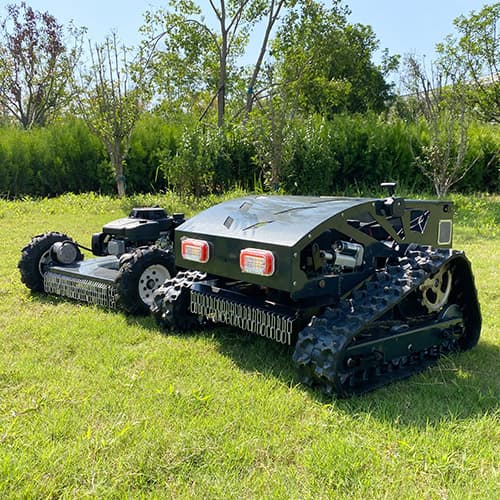

Why Roadside and Embankment Maintenance Requires a Different Approach
Roadside vegetation management forms a critical component of transportation‑infrastructure upkeep. From highway embankments and drainage channels to roadside slopes and public‑infrastructure corridors, regular grass and vegetation control preserves driving visibility, simplifies routine inspections, and keeps outdoor areas in good condition. However, these field assignments are often complex. Uneven ground, steep inclines, limited access, passing roadside traffic and variable plant growth make standard mowing methods difficult to deploy. As infrastructure operators and landscaping contractors seek more reliable workflows for these tough sites, tracked remote control mower and specialized vegetation‑management hardware gain wider industry attention.
KOIVI designs remote‑control mowing solutions built for professional land‑maintenance use‑cases, especially sites with harsh terrain where equipment performance and safe operator positioning carry high priority. For roadside contractors, municipal departments and infrastructure service providers, the core question is no longer simply how to cut grass. It is how to complete recurring vegetation‑management tasks with hardware matched to local site characteristics, workload scale and real‑world operating constraints.
Roadside maintenance covers highly diverse working environments. A crew might service flat grass verges one day, then tackle steep embankments, drainage slopes or bumpy terrain the next. These locations bring multiple practical hurdles:
Steep and uneven terrain: Slopes restrict the usability of traditional ride‑on mowers and tractors. Machine selection must reference actual gradient, surface state and manufacturer‑approved operating boundaries.
Restricted working space: Roadside verges contain signposts, safety barriers, drainage works and trees; equipment needs good maneuverability without damaging surrounding public infrastructure.
Exposure to traffic: Jobs frequently sit close to moving vehicles. Work‑zone layout, traffic control, visibility planning and proper equipment positioning remain mandatory safety considerations.
Changing vegetation conditions: Grass growth shifts with seasons, rainfall and local climate; crews need to handle neatly‑trimmed turf as well as tall, dense rank growth.
These pain‑points explain the value of purpose‑built roadside mowing equipment. Instead of forcing one machine onto every jobsite, contractors can select hardware aligned with each location’s unique demands. Compact units such as mini tank mower perform well for narrow roadside zones with tight clearance requirements.
Remote Control Mowers: A Practical Option for Difficult Terrain
A remote control mower enables operators to supervise equipment from a separate observation point, rather than riding onboard or walking directly behind the unit. This operating model delivers distinct advantages when maintaining slopes and other hard‑to‑reach zones.
Remote‑controlled slope mowers are well‑suited for assignments including:
Highway and roadside embankments
Grass‑covered drainage channels
Roadside verges with uneven ground
Sloped zones surrounding bridges and infrastructure
Commercial properties adjacent to transport corridors
Agricultural access roads and field boundaries
Rough grass areas unreachable for conventional mowing gear
The primary benefit lies in operational flexibility. Operators steer the mower from a stable spot retaining full line‑of‑sight over work, while strictly following machine manuals and site‑specific safety protocols. Remote operation does not inherently render every jobsite risk‑free; not every RC mower fits every slope scenario. Surface dampness, traction performance, field obstacles, visibility limits and factory‑published maximum working angles all require thorough evaluation. Even so, remote‑control technology gives professional maintenance crews an additional tool for planning work in challenging environments.
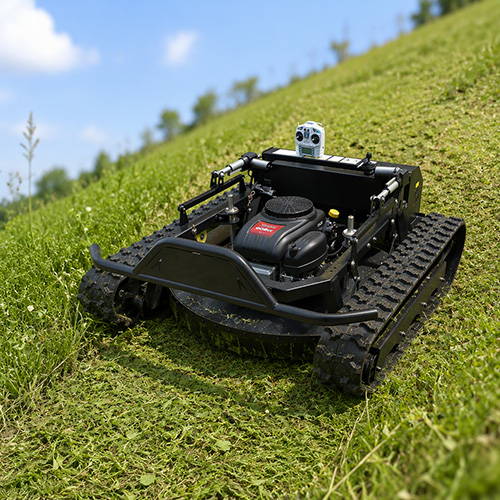
A Growing Focus on Safety and Worksite Efficiency
Safety sits high on the priority list for roadside vegetation management. The California Department of Transportation has trialled remote control mowers as an alternative solution for select roadside vegetation‑control assignments. Its research highlights worker traffic‑exposure and slope roll‑over hazards as key drivers for evaluating remote‑operated machinery. Source: Caltrans research report.
This does not mean remote‑control hardware eliminates all hazards, yet it demonstrates why operator positioning weighs heavily during equipment procurement. For contracting businesses, flexible operating set‑ups can reshape workflows for difficult mowing projects.
Key practical considerations:
Keeping operators out of the machine’s immediate working path where conditions permit
Reducing requirements for direct human operation on certain hazardous inclines
Improving visibility over the mower’s travel route
Selecting hardware optimized for confined‑access locations
Organizing workflows built around formal site risk assessments
Traffic‑management schemes, personal protective gear, safety exclusion zones, operator competency training and emergency response workflows remain mandatory wherever field work occurs. For infrastructure‑maintenance providers, safety and productivity need joint evaluation rather than being treated as separate buying criteria.
What Makes a Suitable Roadside Remote Control Mower?
Not every commercial‑grade mower is purpose‑built for roadside and embankment assignments. Purchasers must assess the full‑system capability instead of fixating purely on horsepower or cutting‑deck width.
| Equipment Feature | Why It Matters for Roadside Maintenance |
|---|---|
| Slope capability | Helps determine whether the mower is appropriate for the intended gradient |
| Traction system | Influences movement on uneven ground and approved sloped surfaces |
| Cutting performance | Determines suitability for grass and the vegetation encountered |
| Remote control system | Supports operation from a separate position |
| Machine dimensions | Affect access to narrow verges and restricted areas |
| Stability and chassis design | Important when evaluating difficult terrain |
| Maintenance access | Helps crews complete inspections and routine servicing |
| Spare parts and technical support | Can influence downtime and long‑term operating reliability |
Highest‑priority specifications shift with each use‑case. Contractors maintaining wide‑open embankments may prioritize cutting width and area‑coverage. Teams working close to drainage infrastructure demand compact footprint plus responsive maneuvering. Multi‑site roadside‑maintenance businesses also place heavy weight upon transport convenience, routine service workflows and vendor after‑sales support. Many field operators also evaluate robot crawler lawn mower units for mixed roadside‑terrain assignments.
From Highway Embankments to Drainage Channels: Key Applications
Remote‑control mowing technology fits multiple roadside and infrastructure‑maintenance scenarios.
Highway and Roadside Embankments
Highway embankments present difficulties stemming from steep gradients, irregular ground and proximity to live traffic. Properly‑specified remote‑control slope mowers let maintenance crews service these zones without putting operators directly onto incline surfaces. Before commencing work, teams must confirm model slope ratings, audit ground‑surface conditions and implement formal traffic plus work‑zone safety controls.
Drainage Channels and Ditches
Grass‑covered drainage ditches commonly feature uneven ground, tight operating space and changing elevation profiles. Equipment selection must account for site access, surface stability, visibility and risks from hidden obstacles. Certain locations call for advance site preparation or alternative maintenance methodologies.
Roadside Verges and Infrastructure Corridors
Roadside verges require recurring vegetation management, though service cycles differ by location and purpose. As one reference example, the Indiana Department of Transportation publishes differentiated mowing schedules for urban roads, rural interstates and other routes, supplemented by spot mowing for visibility and safety improvements. Source: Indiana DOT. This highlights the value of equipment versatility; maintenance teams must cope with shifting vegetation and access constraints all year round.
Commercial and Industrial Infrastructure
Industrial sites, utility premises, transport yards and large commercial estates contain grassy slopes hard to service via conventional machinery. Remote‑control mowers deliver a viable alternative, conditional on matching machine capability against local vegetation, terrain and site‑operating rules.
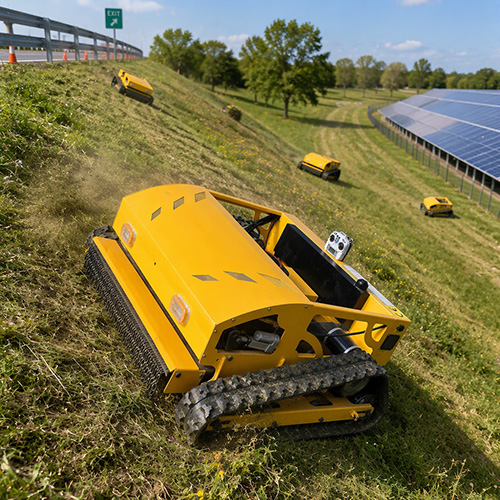
Why Equipment Selection Should Start with the Site
A frequent purchasing mistake is finalizing machine choice before mapping real‑world job‑site requirements. Advertised maximum slope figures do not guarantee safe performance under every possible surface condition. Ground dampness, surface material, travel direction, obstacles and machine setup all alter real‑world working limits.
Before buying roadside‑focused remote‑control mowers, maintenance teams should document conditions they encounter most regularly.
| Site Assessment Factor | Questions to Consider |
|---|---|
| Terrain | What are the typical and maximum gradients? |
| Surface | Is the ground firm, loose, wet, or uneven? |
| Vegetation | Is the work mainly grass cutting or heavier vegetation management? |
| Access | Are there narrow entrances, barriers, or drainage structures? |
| Traffic | What traffic controls and work‑zone arrangements are required? |
| Working area | Is the site open, restricted, or obstructed? |
| Maintenance frequency | How often must each location be serviced? |
| Transport | How will the machine move between work sites? |
This set of reference points enables buyers to evaluate hardware against real‑world operational demands instead of relying purely on marketing‑oriented spec‑sheet figures. You can view our full RC mower lineup when comparing options for roadside‑maintenance projects.
The Role of KOIVI in Professional Vegetation Management
KOIVI develops remote‑control mowing solutions built for professional‑grade deployments where terrain complexity, site‑access limits and operational flexibility govern equipment choices. For roadside‑maintenance contractors and infrastructure service firms, remote‑control mowing hardware functions as one component within a diversified equipment fleet.
It is not designed to fully replace tractors, ride‑on mowers or brush cutters, but to complement existing machinery fleets. This lets businesses deploy the most appropriate tool for each individual assignment: conventional units handle accessible flat ground, and remote‑control mowers address suitable steep or hard‑to‑reach zones.
Prospective KOIVI equipment buyers need to cross‑reference model specifications against their real‑world terrain, vegetation and operating constraints. Critical discussion topics with the supplier include slope operating boundaries, cutting‑deck suitability, remote‑control responsiveness, service workflows, wear‑part stock, warranty clauses and post‑sale technical assistance. Proper machine selection always starts from understanding the actual job requirements. If you would like to discuss roadside‑mowing project requirements with our product specialists, you can get connected via WhatsApp.
Emerging Trends in Roadside Mowing Equipment
Professional vegetation‑management workflows keep evolving as manufacturers refine control logic, monitoring modules and chassis architecture. Several industry shifts deserve attention for buyers sourcing remote‑control mowing hardware:
Improved remote control systems: Intuitive operator interfaces, predictable machine response and clear documentation of equipment operating limits.
More specialized equipment: Move away from one‑machine‑for‑all‑jobs; select purpose‑built hardware for slopes, rank grass and confined‑access sites.
Maintenance and serviceability: Growing focus on convenient inspections, accessible wear‑part replacement and responsive vendor technical support aligned with business operating cycles.
Smarter equipment management: Depending on exact model, on‑board electronic monitoring and diagnostics support condition tracking and planned servicing.
Application‑focused purchasing: Evaluate complete jobsite conditions including transport logistics, site access, vegetation characteristics and on‑site safety protocols.
Note that remote diagnostics, GPS modules, autonomous modes and advanced monitoring capabilities remain model‑dependent and are not standard across all units. For KOIVI and other professional‑equipment makers, the core design goal remains delivering practical hardware solving real‑world maintenance pain‑points.
Frequently Asked Questions
1. What is a remote control mower used for in roadside maintenance?
A remote control mower can be used for suitable grass‑cutting and vegetation management tasks along roadside verges, embankments, drainage areas, and other difficult‑access locations. The appropriate application depends on the machine's design and operating limits.
2. Why use a remote control mower for embankment maintenance?
Remote operation allows the operator to control the mower from a separate position. This can be useful on certain slopes where conventional equipment is less practical, provided the machine is approved for the conditions and appropriate safety measures are in place.
3. Can a remote control mower handle steep roadside slopes?
Some models are specifically designed for slope mowing. Buyers should verify the manufacturer's maximum operating angle and consider ground conditions, traction, travel direction, and other operating restrictions before using the machine.
4. What should contractors consider before buying roadside mowing equipment?
Important factors include slope capability, traction, cutting performance, remote control functions, machine dimensions, transportation, maintenance, spare parts, and technical support.
5. Can remote control mowers replace conventional roadside mowing equipment?
Not in every application. Conventional mowers, tractors, and brush cutters remain useful for many jobs. Remote control mowers are best evaluated as specialized equipment that can complement an existing fleet.
6. Does remote operation eliminate roadside worksite risks?
No. Remote operation may change the operator's position, but traffic exposure, flying debris, machine movement, visibility, and ground conditions still require careful management. Site‑specific risk assessments and appropriate work‑zone procedures remain essential.
7. How can buyers evaluate a KOIVI remote control mower?
Buyers should identify their typical terrain and vegetation conditions, then confirm the relevant KOIVI model's specifications, operating limits, control system, maintenance requirements, and available after‑sales support.
A More Practical Approach to Roadside and Embankment Maintenance
Roadside vegetation‑management extends well beyond simple grass trimming. It means working amid shifting terrain, preserving site access, managing plant growth cycles and building workflows around site‑specific safety constraints. Remote‑control mowing solutions open new possibilities for suitable steep and hard‑to‑access locations, enabling maintenance teams to select hardware better aligned with demanding jobsite realities.
For professional contractors, municipal departments and infrastructure‑maintenance crews, effective equipment strategy is always job‑driven. Slope performance, cutting capability, safe operator positioning, service friendliness and transport practicality all weigh into final purchasing decisions.
KOIVI develops remote‑control mowing solutions for professional land‑maintenance use‑cases, helping buyers source purpose‑built equipment for harsh mowing environments. Where roadside embankments render traditional mowing impractical, properly‑selected remote‑control mowers deliver a viable option for application‑oriented vegetation management.